Working Together in an Inclusive Organisation
Building Trust
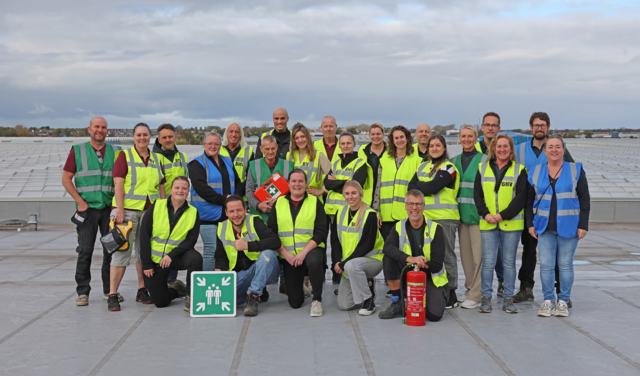
Social

Building Trust
Why is building trust so important to us? Trust shows someone that we believe in their abilities, intentions and dedication to contribute to a shared goal. When you give someone your trust, you give them the space to grow, to take responsibility and to use their unique talents. It opens the door to open and honest communication, strengthens teamwork and helps to solve challenges more quickly.
Without trust, collaboration is simply impossible – it’s a law of nature. But trust is also a versatile concept that everyone experiences differently. We make trust tangible through six key pillars:
- Character: We aim to build teams with a rich variety of personal qualities.
- Consistent behaviour: We strive for an organisation where we can address each other openly and honestly about behaviour.
- Systems: We ensure clear agreements and structures, developed through dialogue with all stakeholders.
- Psychological safety: We aim for an environment where everyone feels safe and mutual respect is central – both inside and outside the organisation.
- Instinct and identification: We pursue an inclusive organisation based on the conviction that diversity is an added value.
- Competence: We foster a culture of learning and development in which colleagues are encouraged to take on new challenges, make mistakes and learn from them – enabling us to grow and improve both individually and collectively.
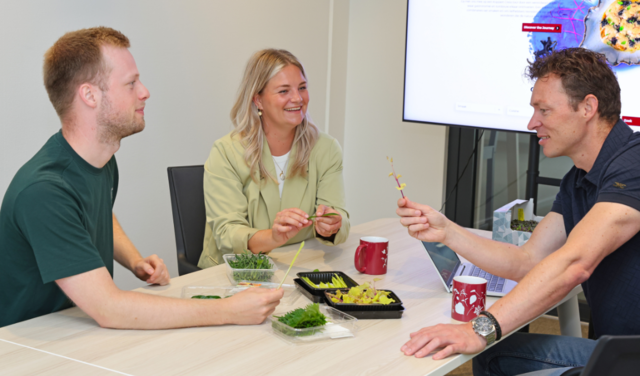
Trust as the Foundation for Inclusion
Value arises from our differences – in backgrounds, experiences and perspectives. Diversity and inclusion are closely linked with trust. As a family business, we aim to be a caring organisation. It can be difficult to translate that into formal policy, so our first focus is on creating a culture of trust – as the foundation for inclusion.
In 2024, we welcomed eight new international colleagues, five of whom progressed from temporary to permanent employment.
Our focus for 2025:
- Diversity in management: Achieving a better gender balance following the appointment of Cinte Welsing to the management team.
- Dutch language courses to support integration of non-native speakers.
- Committee for international employees, part of the Works Council, which discusses key challenges with the management team.
- “We want to bridge the gap between permanent staff and agency workers. That starts with simple things like having lunch together or joining a company party, but also with practical steps such as Dutch language lessons. Those who speak the language find their way more easily – at work and in society. In this way, we ensure everyone truly feels part of the team.”
Our Focus for the Future
At Koppert Cress, we believe that sustainable growth starts with our people. In line with our Ikigai, we have set out three concrete objectives to make our organisation stronger, more transparent and future-proof.
- Building Trust: Trust is not an abstract idea but a daily essential for collaboration. We aim to define what trust means within our work context and capture it in a shared language. This helps us to address one another constructively – with both praise and feedback – and supports leaders and teams in learning how to grow together.
- Renewing the HR Cycle: The traditional annual appraisal no longer fits the way we work. We want a culture of ongoing dialogue, where employees regularly discuss their development, ambitions and contribution to the team. These conversations need not only happen in an office, but can also take place on the work floor – where real collaboration happens.
- Employee Engagement Survey (EES): After several years without one, we plan to once again listen to the voices of our employees. The value of such a survey lies not in the numbers but in what we do with them: translating feedback into tangible improvements and visibly communicating the outcomes. Only by showing that we listen and act can we strengthen trust and engagement.
“Better to skip a year than to conduct a survey that leads nowhere. If we do it, we’ll do it right – with results that everyone can feel.”
In Summary: at Koppert Cress, we are building an inclusive organisation rooted in trust. A place where colleagues have the space to grow, where differences are valued, and where every voice counts – because sustainable growth begins with people who feel seen, heard and appreciated.
Sustainable stories
Introduction
Powerful stories that capture our nature: sustainability at every level and in every aspect.
-
Ecological
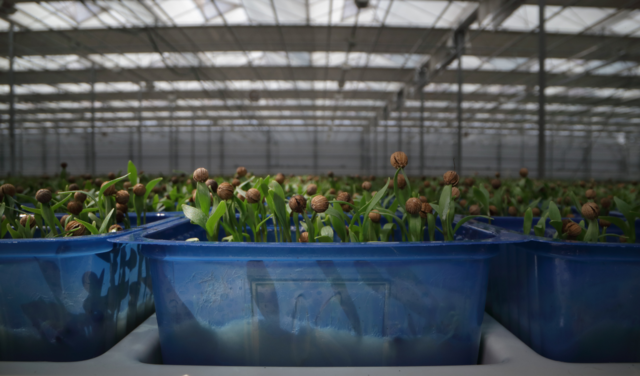
Product Carbon Footprint: an insight into the emissions from a box of Cress
Product Carbon Footprint: insight into the emissions from a box of Cress
At Koppert Cress, we work every day to reduce our impact on the climate and the environment. Insight is essential if we are to make targeted improvements. That is why we have been calculating our Corporate Carbon Footprint (CCF) for many years: the total emissions of our organisation.
However, as not every product has the same impact, we wanted to be able to manage this even more precisely. That is why we have also developed a Product Carbon Footprint (PCF) for our products. This involves mapping the total greenhouse gas emissions throughout a product’s entire life cycle: from the seed right through to the waste disposal of the packaging (or ‘cradle-to-grave’).
-
Ecological

Koppert Cress's climate goals validated by SBTi
Sustainability requires more than just ambition. That is why Koppert Cress had its climate targets validated by the Science Based Targets initiative (SBTi). This independent organization assesses whether climate targets are aligned with the latest climate science and contribute to limiting global warming. With this validation, the SBTi confirms that Koppert Cress’s climate targets are specific, measurable, and aligned with international climate goals.
-
Social
Working Together in an Inclusive Organisation
Why is building trust so important to us? Trust shows someone that we believe in their abilities, intentions and dedication to contribute to a shared goal.
-
Social
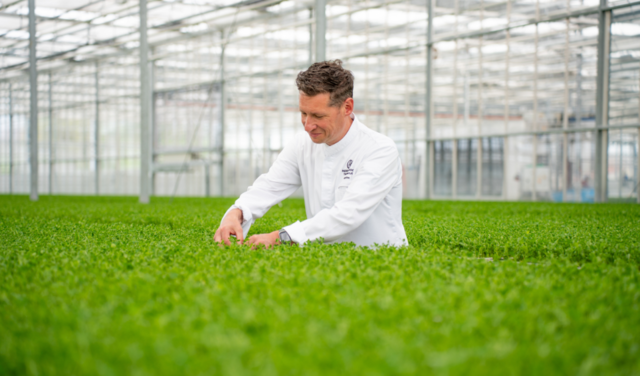
Learning to Change: Connecting Healthy Food, Education and Gastronomy
Koppert Cress and Hotelschool The Hague demonstrate how education, gastronomy and horticulture can strengthen one another. With storytelling as a connecting force, they bring the origin, value and experience of food to life — inspiring the next generation to contribute to a healthier food future.